
Article · Hair & Scalp
Everything You Need to Know About Scalp Health
Healthy hair starts beneath the strands — at the scalp.
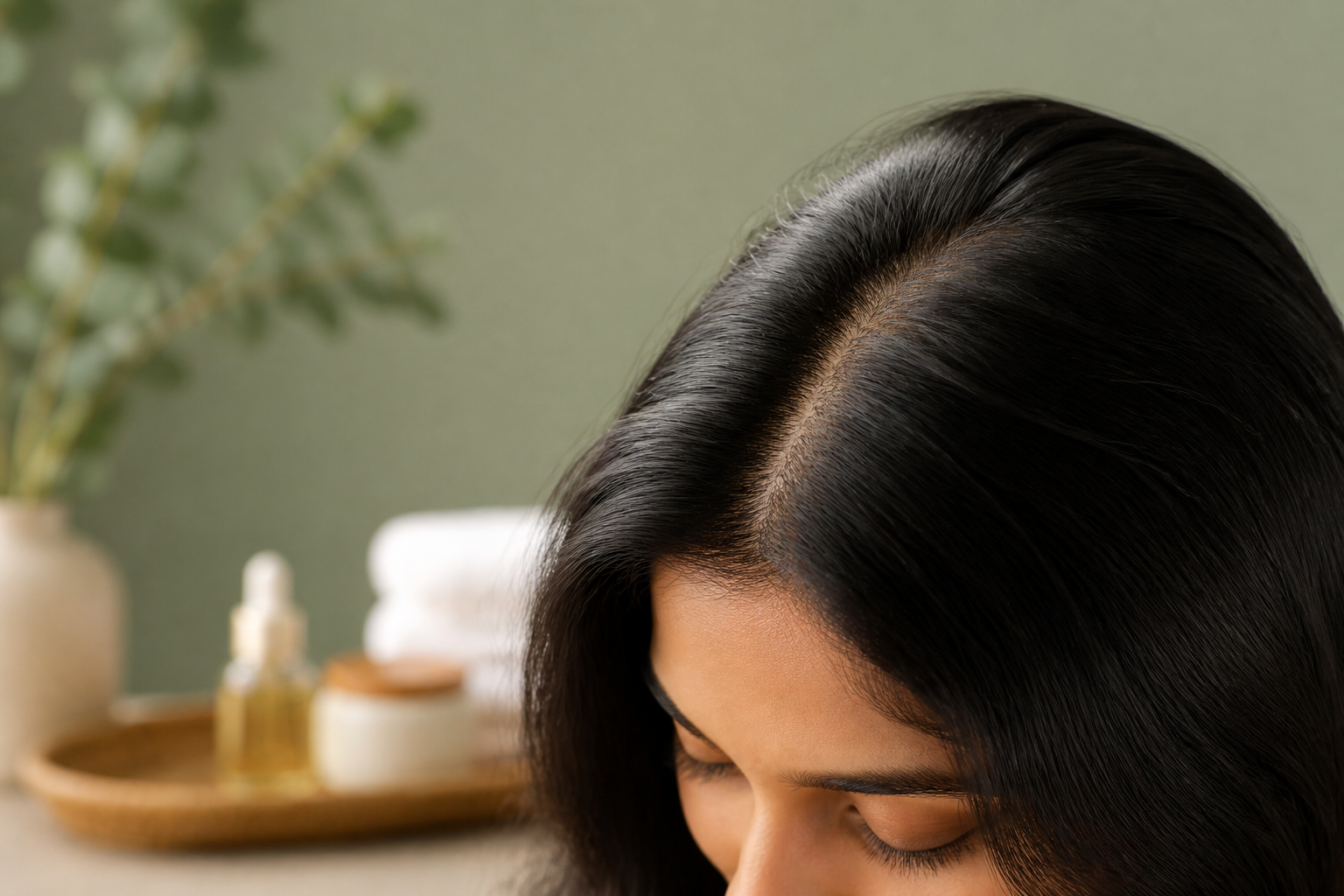
Hair care starts where the hair grows
For years, hair care meant caring for the hair shaft — the strands themselves. But healthy hair actually starts beneath it, at the scalp. Scalp-first hair care is one of the biggest shifts in the industry, with the scalp finally being treated with the same rigor people apply to their facial skin.
Why the scalp matters so much
The scalp is skin — it has the same layers, the same barrier function, and the same oil (sebum) and microbiome balance as facial skin. Every hair follicle grows out of it, which means the health of the scalp directly determines the health, thickness, and growth rate of the hair.
An imbalanced scalp — too oily, too dry, inflamed, or clogged — creates a poor environment for follicles, often showing up as excess shedding, slowed growth, itchiness, flaking, or dullness in the hair itself.
Common scalp issues
Dandruff and seborrheic dermatitis
Flaking and itching caused by an overgrowth of yeast (Malassezia) on the scalp, often combined with excess oil production.
Scalp acne (folliculitis)
Clogged follicles leading to small, tender bumps — often from product buildup, sweat, or friction from helmets and tight hairstyles.
Excess oil (seborrhea)
Overactive sebaceous glands leave hair looking greasy quickly after washing, and can contribute to flaking and irritation.
Dry, flaky scalp
Often mistaken for dandruff, this is usually barrier-related dryness rather than a yeast overgrowth — and needs hydration rather than anti-fungal treatment.
Scalp sensitivity and inflammation
Redness, tightness, or a burning sensation, often triggered by harsh sulfates, styling product buildup, or over-washing.
Building a scalp-first routine
- Treat the scalp, not just the hair. Choose shampoo based on your scalp's needs — oily, dry, flaky, or sensitive — rather than your hair type alone.
- Exfoliate gently, and not too often. Scalp scrubs or exfoliating shampoos once every one to two weeks can clear buildup from oil, dead skin, and styling products. Over-exfoliating the scalp causes the same irritation it does on facial skin.
- Don't skip scalp serums. Just as facial serums target specific concerns, scalp serums with ingredients like niacinamide, salicylic acid, or peptides can target oil control, flaking, or follicle stimulation.
- Massage regularly. Scalp massage — with fingers or a scalp massager — improves circulation to the follicles and can be done daily during washing or with oil treatments.
- Watch your wash frequency. Both over-washing and under-washing can disrupt the scalp's natural balance. Most people do best somewhere between every other day and twice a week, depending on oil production.
- Protect from the sun. The scalp, especially along the part line, is frequently sunburned — and this can affect both skin health and hair growth.
When to see a specialist
Persistent itching, unusual bald patches, painful bumps, or shedding that feels excessive can point to conditions that need professional diagnosis — from fungal infections to early-stage alopecia. A proper scalp analysis can identify exactly what's happening beneath the surface before it affects the hair long-term.
Interested in a professional scalp assessment? Our clinic offers detailed scalp analysis to identify the right treatment path for your hair goals.
Healthy hair is grown, not just styled. Caring for the scalp is caring for every strand that follows.
Have a specific skin concern?
Book a consultation with Dr. Sai Preethi for a diagnosis-first treatment plan.
Book Consultation