
Article · Acne
Why Acne Happens: Causes, Myths & Treatments
What's actually happening beneath the surface — and what helps.
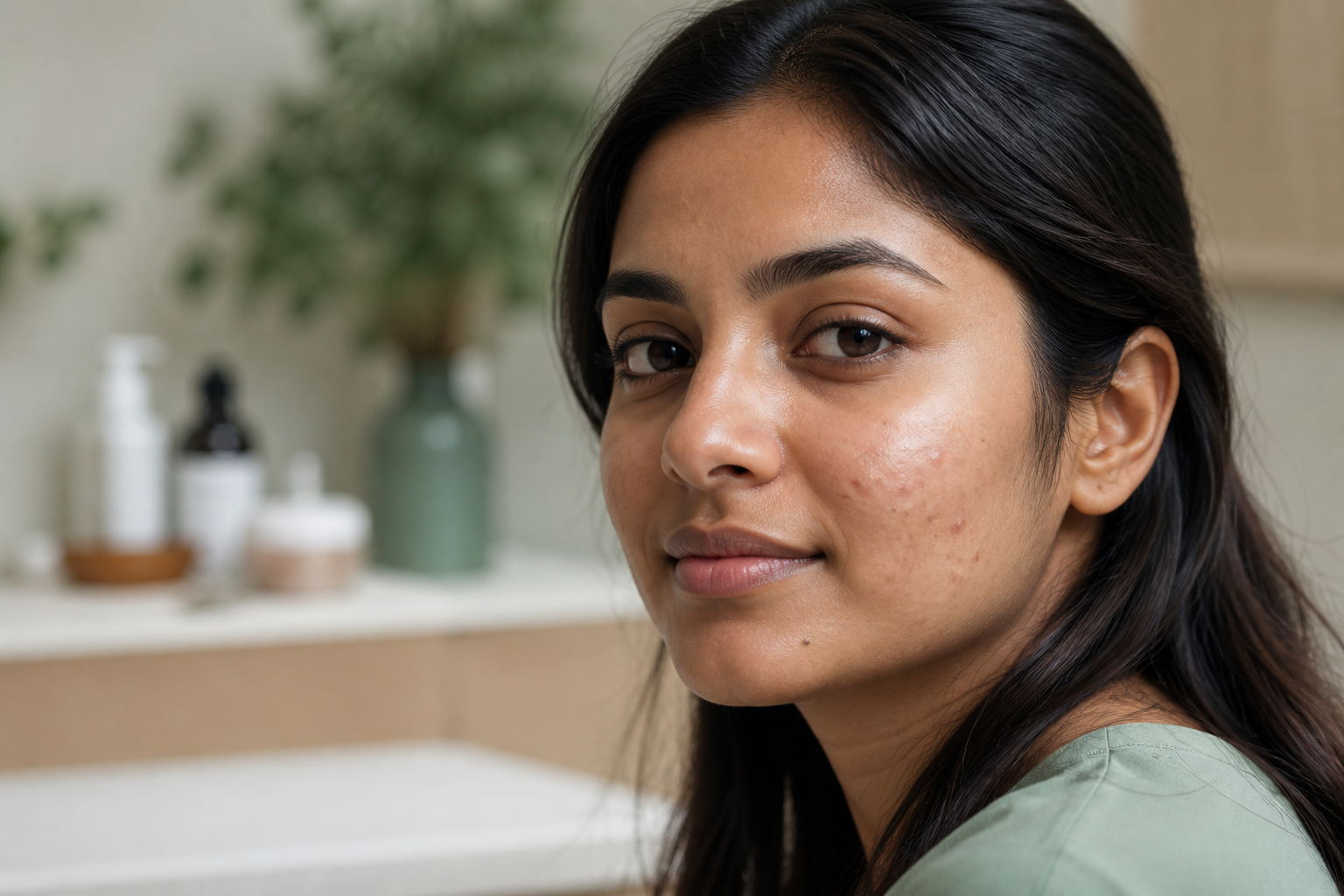
Acne is common. Misunderstanding it is even more common.
Acne is one of the most common skin conditions in the world, affecting people well beyond their teenage years — yet it remains one of the most misunderstood. Here's what's actually happening beneath the surface, and what helps.
What causes acne, really
Acne develops through a combination of four main factors working together:
1. Excess oil (sebum) production
Hormonal signals, especially androgens, increase oil gland activity — particularly during puberty, before periods, or with conditions like PCOS.
2. Clogged pores
Dead skin cells that don't shed properly mix with oil and block the follicle opening, forming the basis of a comedone — a blackhead or whitehead.
3. Bacteria
Cutibacterium acnes, a bacteria naturally present on skin, multiplies inside clogged, oil-rich follicles, contributing to inflammation.
4. Inflammation
The body's immune response to the clogged, bacteria-filled follicle produces the redness, swelling, and pain associated with inflammatory acne — papules, pustules, and cysts.
Genetics, hormones, stress, certain medications, and some cosmetic products can all influence how strongly these four factors act.
Common acne myths
Myth: Acne is caused by poor hygiene
Over-washing doesn't clear acne — it strips the skin's barrier and often makes inflammation worse. Acne is not caused by dirty skin.
Myth: Only teenagers get acne
Adult acne is extremely common, particularly in women, often linked to hormonal fluctuations, stress, or underlying conditions like PCOS.
Myth: Chocolate and greasy food cause breakouts
Diet's role in acne is more nuanced. High-glycemic diets and, for some people, dairy have shown links to acne severity in research — but chocolate itself has not been clearly proven as a direct cause.
Myth: You should let acne "run its course" without treatment
Untreated inflammatory acne carries a real risk of permanent scarring and post-inflammatory pigmentation. Early, appropriate treatment reduces this risk significantly.
Myth: Popping a pimple speeds up healing
Popping pushes bacteria and inflammation deeper into the skin, increasing the risk of scarring and spreading the breakout rather than resolving it.
Myth: Natural or "chemical-free" products are safer for acne-prone skin
Many natural ingredients (like essential oils) are more likely to irritate acne-prone skin than well-studied active ingredients like salicylic acid or benzoyl peroxide.
Treatment options
Effective acne care is rarely one product. It is about matching the right tools to the factors driving your breakouts.
Topical treatments
Benzoyl peroxide, salicylic acid, and topical retinoids remain first-line treatments for mild to moderate acne, targeting clogged pores, bacteria, and inflammation directly.
Oral medications
For moderate to severe or hormonal acne, options include oral antibiotics for short-term inflammation control, hormonal treatments (like certain birth control pills or spironolactone) for hormonally driven acne, and isotretinoin for severe, scarring, or treatment-resistant acne.
In-clinic procedures
Chemical peels, certain laser and light therapies, and extraction of stubborn comedones can complement a daily skincare routine — especially for acne that isn't fully responding to topical treatment alone.
Scar management
Once active acne is under control, treatments like microneedling, certain lasers, and chemical peels can address resulting scarring and pigmentation.
The bigger cultural shift
One encouraging shift is the move away from "hiding" acne toward understanding and destigmatizing it. Acne is a medical condition influenced by genetics and hormones — not a personal failing or a hygiene issue. Treating it effectively starts with understanding what's actually causing it in your specific case.
When to see a dermatologist
If over-the-counter treatments haven't improved your skin after eight to twelve weeks, if breakouts are painful, cystic, or leaving marks, or if you suspect a hormonal cause, a dermatologist can identify exactly which of the four underlying factors is driving your acne — and build a treatment plan targeted to it, rather than more trial and error.
Struggling with persistent or scarring acne? Book a consultation for a personalized treatment plan built around your skin's specific triggers.
Acne is a medical condition — not a personal failing. Understanding the cause is the first step toward clearer, healthier skin.
Have a specific skin concern?
Book a consultation with Dr. Sai Preethi for a diagnosis-first treatment plan.
Book Consultation